Full Body Respray
Full Body Respray
A full body respray is the definitive way to restore a car's exterior — whether it's a faded, sun-damaged older vehicle, a car with widespread scratches and panel repairs, or a complete colour change to something entirely new. Unlike a wrap, a respray is permanent, and it lets us work directly with the metal and panels beneath to correct defects a wrap can't hide. It's a serious investment, but done properly, it can reset the car's appearance to factory-fresh — or better — for many years. Every job starts with a free inspection, paint-depth assessment, and a detailed plan.
- Free inspection & detailed estimate
- Solid, metallic & pearl finishes
- OEM-grade paint systems
- 12-month workmanship warranty
When a full respray is the right choice
A respray is a significant investment, and it's not the right answer for every car. Here are the situations where it makes sense — and where it doesn't:
Clear coat failure
Peeling, cracking or chalky clear coat across multiple panels — the classic sign of paint that's reached the end of its life in the sun. No polish or coating can fix it; the only real remedy is respraying.
Widespread damage
Multiple scratched, dented or repaired panels where individually refinishing each one would cost as much as a full respray — and wouldn't deliver the same consistency.
Colour change
You want a completely different colour — from silver to black, from blue to red — and a wrap doesn't give the permanence or depth you're after.
Restoration projects
Classic, vintage or enthusiast cars being brought back to original condition. A properly-executed respray is a signature part of a quality restoration.
Faded factory paint
Significant oxidation across the whole car — colour is dull, uneven, or has shifted from the original shade. Respray is the only way back.
Not for small damage
If only one or two panels are affected, or the paint is fundamentally healthy, spot refinishing or paint correction is almost always the smarter choice. We'll tell you honestly which one you need.
Paint types — what you're choosing between
The type of paint you select makes a huge difference to the final look, durability and price. Here's the honest breakdown:
- Solid (2K acrylic) — simple, bold colours with no metallic particles. Cheapest to apply. Very durable and easy to repair later.
- Metallic — contains aluminium particles that catch the light, giving depth and sparkle. Most modern car colours are metallic. Moderate cost.
- Pearl / Mica — ceramic particles that shift hue depending on the angle of light. Beautiful depth but hardest to match and repair. Highest cost.
- Matte / satin clear — modern finishes with a soft sheen instead of full gloss. Striking but more maintenance-sensitive.
How the process works
Inspection & Paint Assessment
Full inspection of every panel, measuring paint depth and identifying dents, rust, previous repairs and clear-coat condition. You receive a written plan showing every element of the job and its cost.
Disassembly
Handles, mirrors, badges, lights, bumpers, trims and glass rubbers are removed. Painting "around" these parts leaves visible paint lines and shortens the life of the respray — proper disassembly is what makes the difference between a great respray and a poor one.
Panel Preparation & Repair
Dents are beaten out, rust treated to bare metal, old filler stripped if necessary, and any previous poor repairs corrected. This is the stage most cheap resprays skip — and the reason they fail within a couple of years.
Sanding & Priming
Panels are progressively sanded back, then primed and wet-sanded to a perfectly flat surface. Any imperfection left at this stage will show in the final finish.
Sealing & Masking
Primed panels are sealed to prevent reaction with the new topcoat, and the vehicle is carefully masked so no overspray touches areas that shouldn't be painted.
Base Coat Application
The colour is applied in a climate-controlled booth, panel by panel. Metallic and pearl finishes need multiple uniform coats with correct spray technique to avoid mottling or tiger-striping. This is a trained skill, not a spray-and-hope job.
Clear Coat Application
Multiple layers of clear coat are applied to seal in the colour and give the finish its gloss and UV protection. Clear coat is what makes the paint durable; a thin clear coat fails quickly.
Curing & Finishing
The paint is allowed to cure fully, then wet-sanded and machine polished to remove any surface imperfections from the spray process. Only at this stage does the final gloss appear — this is the polish that separates a good respray from a great one.
Reassembly & Final Inspection
Removed parts are reinstalled, gaps and alignments checked, and the entire vehicle is inspected under bright lighting from every angle. Any final issues are corrected before handover.
What affects the cost of a respray
Respray pricing is genuinely variable — the same car can range dramatically depending on these factors. Understanding them helps you compare quotes honestly:
- Vehicle size — a small hatchback uses far less paint and labour time than a 7-seater SUV or pickup.
- Paint type — solid is cheapest; metallic costs more; pearl adds further; matte clear is a premium finish.
- Colour complexity — some colours (deep reds, metallic blacks) are harder to apply evenly and require more paint.
- Colour change vs same-colour — changing colour means painting door shuts, engine bay, boot interior, and any visible frame elements. Adds significant labour.
- Panel condition — dented, rusted or previously-repaired panels need more preparation before they can be painted.
- Level of disassembly — full-disassembly resprays (bumpers, lights, trims, glass removed) cost more but deliver a far better result than "tape-and-spray" jobs.
We quote transparently — every line item is explained in your written estimate. There are no hidden charges added during the job.
Aftercare — protecting your new respray
New paint continues to cure and outgas for 30–90 days. The care you give it in this window affects how it looks for years:
- Wait 30 days before waxing, sealing or coating — applying these too early traps solvents under the paint, which can cause blistering or hazing.
- Avoid high-pressure washing for 30 days — gentle hand washing only. Fresh paint is softer and more susceptible to damage.
- Never use automatic car washes with brushes — this applies permanently, but especially during the first 90 days when the paint is most vulnerable.
- Avoid parking under trees for the first month — tree sap and bird droppings are particularly aggressive against fresh paint.
- After 90 days, apply ceramic coating or PPF — this locks in the finish and protects against UV, chips and contamination for years. Strongly recommended after any respray investment.
- Book a 30-day and 90-day check-up — we inspect the finish, check for any settling or reaction, and advise on the next protection stage. Free of charge.
- Wash regularly with pH-neutral shampoo — every 2 weeks with the two-bucket method. Regular care is the single biggest factor in paint longevity.
How long does a respray take?
Realistic timelines at our Karen studio:
- Same-colour, exterior-only respray: 7–10 working days.
- Full colour change (with door shuts, engine bay, boot): 10–14 working days.
- Restoration-grade respray with panel repair: 2–4 weeks.
- Add ceramic coating or PPF: +1–3 days after paint has cured.
Why choose DOP RESPRAY & DETAILING for your respray?
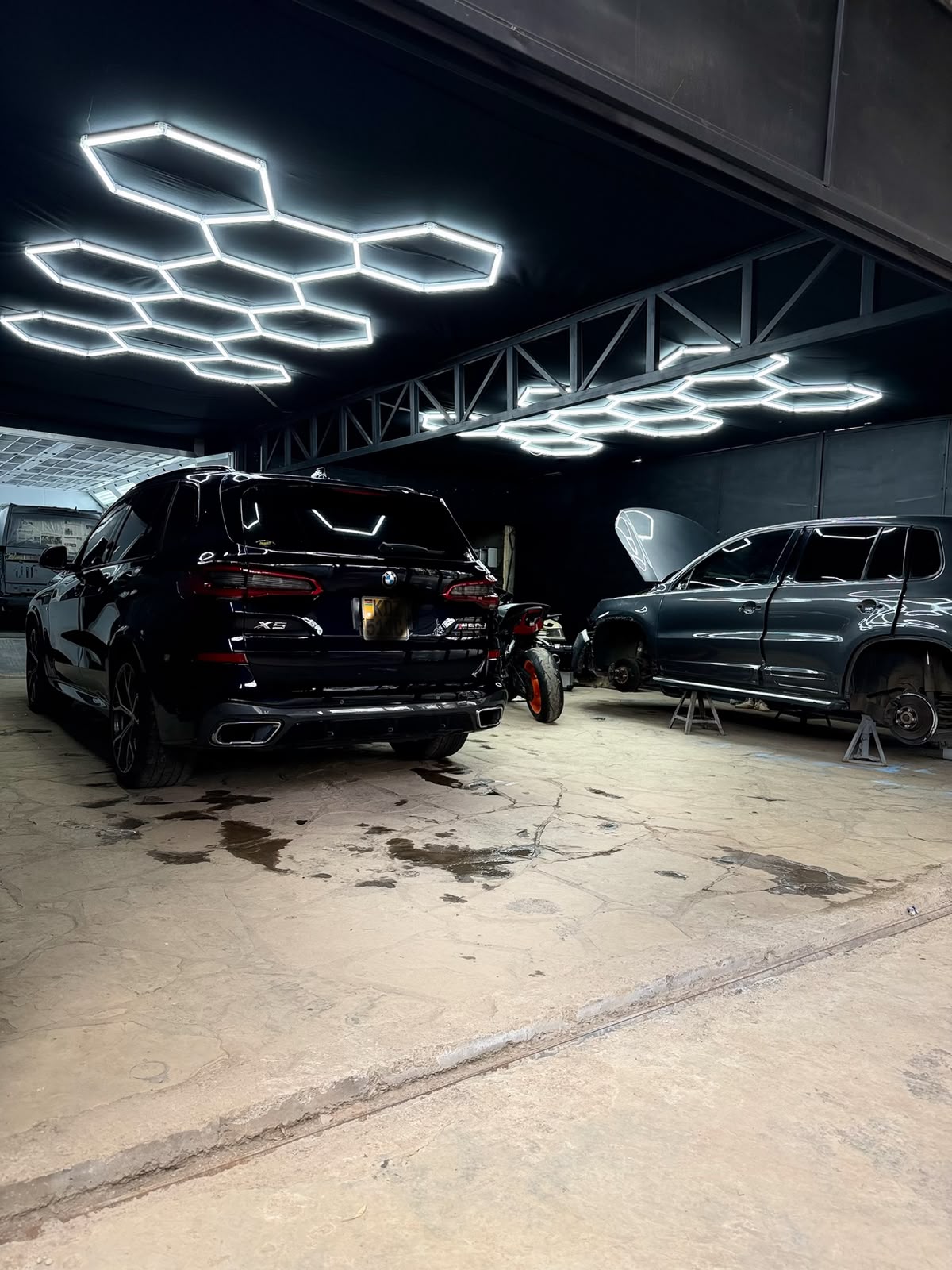
Respray quality is almost entirely determined by preparation — and preparation is exactly where cheap resprays cut corners. Our process involves full disassembly, proper panel repair, rust treatment to bare metal, multiple sanding and priming stages, and finish polishing after curing. We use a climate-controlled spray booth with OEM-grade paint systems, and we measure paint depth on every panel before starting so we know exactly what we're working with.
We also give you a documented estimate that lists every stage of the work — so you can see what you're paying for, and compare honestly against cheaper quotes. If a competing quote is dramatically lower, it's usually because something is being skipped. We won't skip it.
Frequently asked about full body resprays
Should I respray or wrap my car?
Will a respray affect my car's value?
How long will the new paint last?
Can I change the colour completely?
Do you provide a warranty on resprays?
Can you match my original factory colour exactly?
Do I need to strip the interior or remove anything before handing over?
How much does a full body respray cost?
Get an instant quote for Full Body Respray
Free inspection, detailed written estimate, and honest advice — ready in under two minutes.