 DOP RESPRAY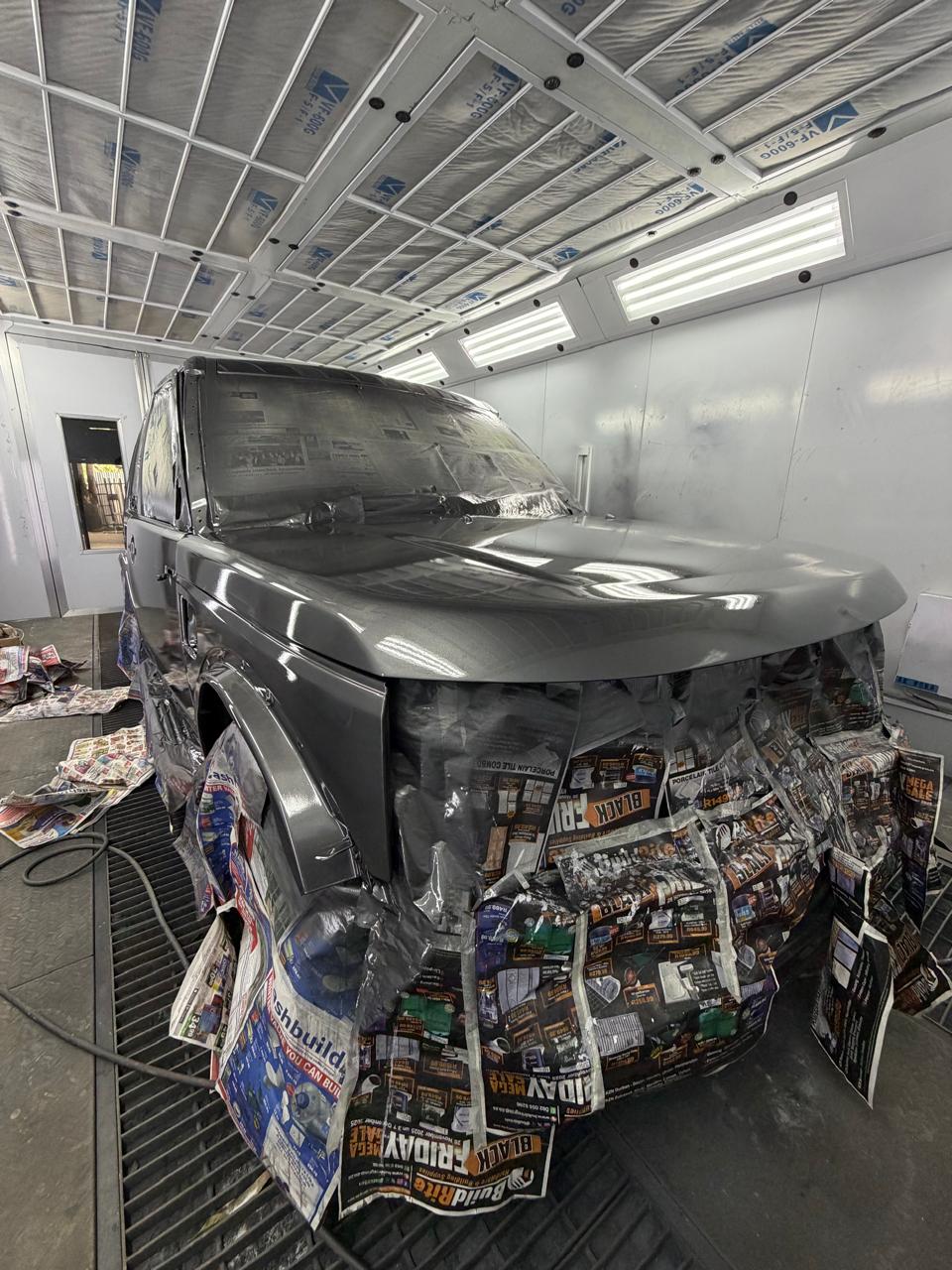
Clear coat failure is the single most expensive paint problem a car owner can face — and the most preventable. Caught in its early stages, it's often a manageable cosmetic issue that a detailer can slow down or partially correct. Caught late, it means the paint beneath is exposed, oxidising and eventually delaminating — and the only real fix is a full respray of the affected panels. In Nairobi's climate, where UV intensity is significantly higher than at sea level, clear coat failure happens faster than in most other places in the world.
We see clear coat failure in our Karen workshop every single week. And every time, we think the same thing: if the owner had known what to look for, they could have caught this a year ago. This article gives you the five specific signs that indicate clear coat failure — what they look like, what causes them, and what they mean for your car's future.
What is clear coat, and why does it fail?
Your car's paint has two visible layers: the base coat (the coloured layer) and the clear coat (a transparent protective layer on top). The clear coat is what gives your car its gloss, its depth, and — most importantly — its protection from UV, chemicals, and physical damage.
Factory clear coat is typically 30–50 microns thick — thinner than a human hair. It's designed to last the life of the car, but only under reasonable conditions. In Nairobi's high-altitude, equatorially-intense sun, that clear coat is doing a much harder job than it would in Europe or the US.
Clear coat failure starts when the top layer of the clear coat is chemically broken down by UV radiation. Once that happens, the exposed clear coat begins to oxidise — meaning it reacts with oxygen in the air and loses its structure. It gradually becomes chalky, then thin, then cracked. Eventually, it delaminates completely from the base coat beneath it.
Once clear coat has fully failed, it cannot be restored. It can only be removed and replaced by respraying.
The five warning signs
These are the signs we look for during any inspection — in order from earliest to latest stage:
1. Dullness that polishing won't fix
The earliest and most subtle sign. The paint looks slightly duller than it used to — not scratched, not dirty, just flat. When you look at it in direct sunlight, the surface doesn't reflect light as sharply as before. A car that once had a mirror-like finish now looks "tired".
The key indicator: this dullness doesn't fully disappear after polishing. If a professional machine polish brings back temporary shine but the paint reverts to dull within weeks, the clear coat is thinning or has already started to oxidise. Polishing removes material, so on a thin clear coat it can actually accelerate the failure.
What to do: Book a paint depth reading. If the clear coat is still healthy but just oxidised on the surface, a light correction can help. If the clear coat is measurably thin, we recommend slowing the failure with a protective ceramic coating instead of polishing further.
2. Chalky or milky appearance
As oxidation progresses, the surface starts to look chalky, milky or hazy — especially on horizontal surfaces like the roof, bonnet and boot lid, which receive the most direct sun exposure. This is one step beyond simple dullness: the clear coat is actively breaking down chemically.
You'll often notice this most clearly on darker cars — the rich black, red or blue you once had now looks washed out and slightly grey. On lighter cars it can be harder to spot but shows as a loss of "punch" in the colour.
What to do: This is still (usually) reversible with a professional paint correction — but only if the clear coat hasn't thinned too much. It needs a full inspection and depth reading first. From this point, the priority is protecting whatever clear coat remains with a ceramic coating.
3. Visible swirl marks that won't wash out
Swirl marks (those fine circular scratches you see in direct sunlight) are technically not a sign of clear coat failure — they're caused by bad washing. But they become relevant here because: as clear coat thins, swirl marks become more visible, harder to remove, and more damaging.
If your car suddenly shows extensive swirl marks that used to be minor, or if the swirls look deeper than before, it's often because the clear coat layer is thinner and can no longer hide them the way it used to.
What to do: Stop using automatic car washes. Switch to the two-bucket hand wash method immediately. Book a paint depth reading to understand how much clear coat is left before deciding on any correction.
4. White cloudy patches (oxidation spots)
As oxidation advances further, it stops being uniform and starts appearing as distinct patches of white or grey cloudiness. These patches are often on horizontal panels — the roof, bonnet, boot lid, and tops of doors. In the early stages they look like slightly lighter areas of colour. In later stages they're clearly chalky, whitish patches.
This is the point where the clear coat has definitively failed in those specific areas. The good news: these patches are still localised. If caught here, a professional refinish of just the affected areas can restore the car without a full respray.
What to do: This needs professional assessment. Spot refinishing (see our Precision Spray Painting service) can restore localised patches before the failure spreads.
5. Peeling or flaking clear coat
The final stage, and the one every car owner dreads. The clear coat has completely delaminated from the base coat and is peeling off in patches, flakes or sheets. You can literally pick at the edges. The exposed base coat beneath starts to fade and chalk within weeks.
At this stage, the clear coat cannot be saved. It needs to be removed and replaced — which means a full respray of the affected panels. If the failure is widespread, it means a full body respray.
What to do: This is now a paintwork problem, not a detailing problem. See our Full Body Respray page for options, or book a free assessment to discuss whether a partial or full respray is right for your car.
Where on the car clear coat fails first
Clear coat failure doesn't happen uniformly. It starts on the surfaces that face the sun directly and most consistently. In our workshop, we see it in this order:
If you're checking your car, start at the roof. If the roof is fine, the rest probably is too. If the roof shows early signs, expect the other surfaces to follow within a year or two.
What accelerates clear coat failure in Kenya?
Some cars fail much faster than others, even at the same age. The key accelerating factors:
- Parking outdoors in direct sun. The single biggest factor. A car that lives in the sun fails 3–5 years earlier than one that lives in shade.
- Altitude. Nairobi sits at ~1,600m, which reduces atmospheric UV filtering. A car here takes more UV than the same car at sea level.
- No protection. Uncoated, unwaxed paint fails much faster. Ceramic coating and regular sealing can add years of life.
- Automatic car washes. Brush washes mechanically wear clear coat thinner over time. Regular use of these dramatically shortens clear coat life.
- Aggressive polishing. Repeated aggressive polishing (not our process — a rushed one) removes clear coat thickness and accelerates failure.
- Chemical exposure. Bird droppings, tree sap, industrial fallout — all accelerate clear coat breakdown if left on the surface.
What to do at each stage
If you recognise any of the five signs, here's what each stage needs:
Frequently asked questions
The bottom line
Clear coat failure is a slow, predictable process — and every stage of it is possible to recognise if you know what to look for. Dullness that survives polishing, chalky appearance, deeper swirl marks, white cloudy patches and finally peeling are the five signs to watch for. Caught at stage 1 or 2, the fix is affordable. Caught at stage 5, it becomes a full respray.
If you're worried about your clear coat — or you'd just like to know what state it's in — call us on 0775-358-536 or book a free paint inspection at our Karen studio. We'll measure the paint depth, look at the surface condition, and tell you honestly what stage you're at — and what needs doing. No pressure, no upselling.
Worried About Your Clear Coat?
Book a free paint depth inspection and clear coat assessment at our Karen studio. We'll tell you exactly what stage your paint is at — and what to do about it.