
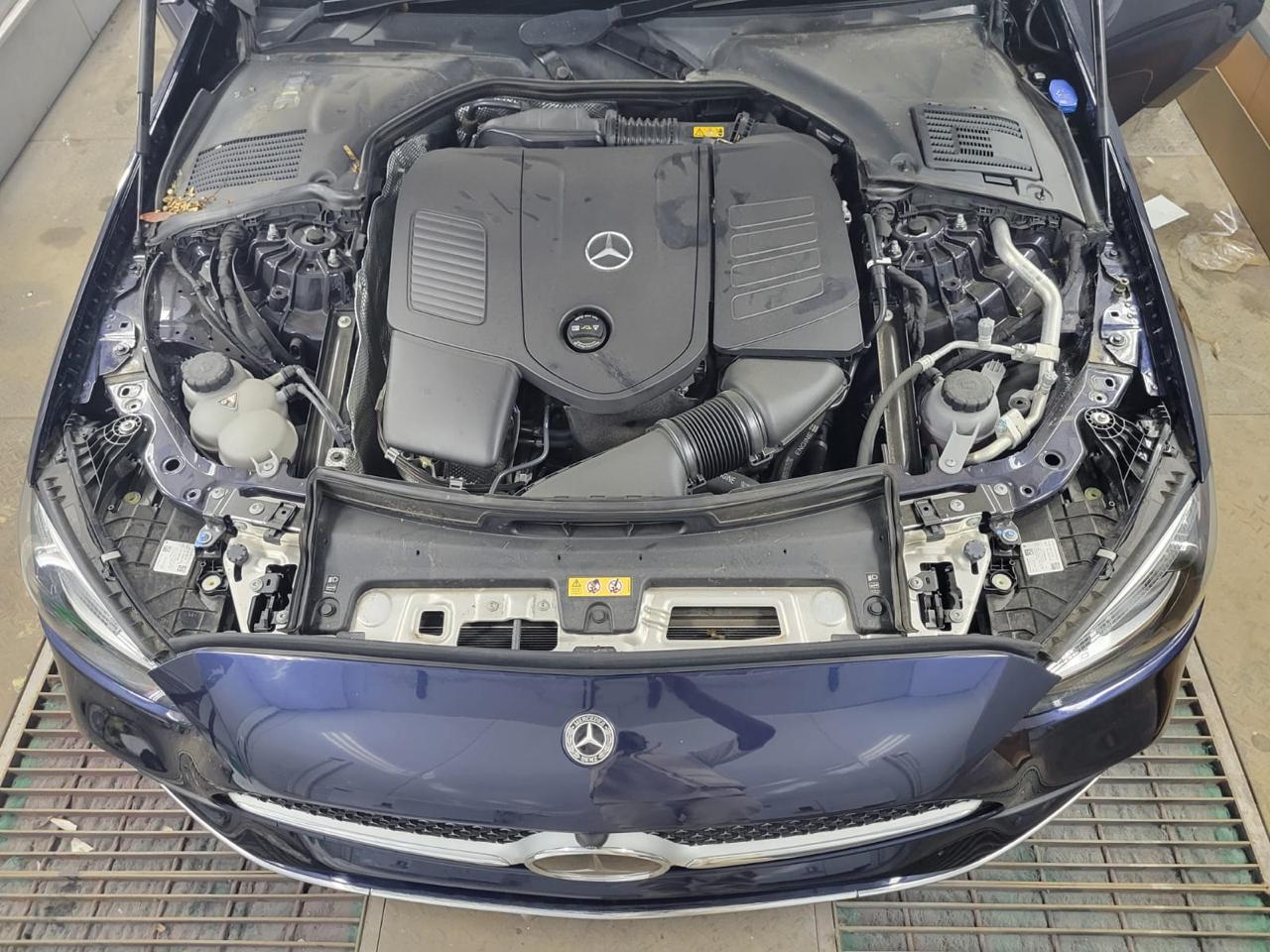
Search "how to clean an engine bay" online and you'll get hundreds of confident-sounding answers: pressure wash it, spray it with degreaser, hose it down. What most of those guides don't mention is that the wrong method can cause thousands of shillings in electrical damage. We've had customers come to us after a "quick engine clean" left their car with a misfire, a failed alternator, or a dead ECU — problems that would have been entirely avoidable with a different approach.
So is engine bay cleaning safe? The honest answer is: yes, when it's done correctly, and no, when it isn't. Modern engine bays are packed with sensitive electronics, and knowing what to protect — and what to avoid — is what separates a safe clean from an expensive mistake. This article explains what can go wrong, why, and how professionals manage the risk.
Why engine bays are risky to clean
The engine bay is the most electronically dense part of your car. In a modern vehicle, you'll find:
- The ECU (Engine Control Unit) — the car's brain, usually a sealed metal box but with connectors that water can seep into
- The alternator — generates your car's electricity, and moisture inside it leads to corrosion and failure
- The fuse box — dozens of sensitive circuits, often located near the top of the engine bay
- Coil packs, ignition coils, spark plug wells — water trapped here causes misfires and rough running
- Sensors — MAF, MAP, oxygen sensors, crankshaft position sensors — all essential, all sensitive to moisture
- Wiring harnesses and connectors — dozens of them, many with exposed pins that can corrode
Water and electricity don't mix. But it's more subtle than that: modern electrical connectors are designed to tolerate humidity, not direct water pressure. High-pressure water forces past seals, into connectors, and into places it was never meant to reach.
What can actually go wrong
Based on cars we've seen in our workshop after DIY or careless engine cleaning, here are the most common failure modes:
The pattern is clear: the damage is almost always caused by water pressure, water volume, or chemical aggression. Reduce all three, and engine bay cleaning becomes safe.
What NOT to do
If you're thinking of cleaning your engine bay at home, avoid these entirely:
- High-pressure pressure washer — the single most common cause of engine bay damage. Never use it.
- Hosing it down with a garden hose — even low-pressure water shouldn't be sprayed freely at electrical areas. Water finds ways in.
- Household degreasers — kitchen or oven degreasers are far too aggressive for automotive use. They corrode aluminium and strip protective coatings.
- Running the engine before cleaning — a hot engine is more likely to trap steam and moisture. Always work on a COOL engine.
- Starting the engine immediately after — give it time to fully dry. Even a tiny bit of residual moisture in an electrical connector becomes a problem under load.
- Silicone spray dressing over wet surfaces — traps moisture underneath, causing corrosion. Any dressing must go on a fully dry engine.
How professionals clean engine bays safely
Our approach at DOP is built around one principle: reduce water pressure and chemical aggression to the minimum that still gets the job done. Here's how that works in practice:
- Engine off and fully cool. Always. We never clean a warm engine bay.
- Full masking of sensitive areas. Alternator, ECU, fuse box, all visible electrical connectors, air intake. Waterproof covers on everything we don't want wet.
- Dry debris removal first. Compressed air and vacuum remove loose dust and leaf litter before any liquid touches the bay.
- Automotive-grade degreaser only. pH-balanced products formulated for engine bays — not household cleaners, not industrial degreasers. Applied with brushes and spray bottles, not pressure.
- Low-pressure rinse — or no rinse at all. For light jobs, we clean with damp cloths and brushes, no rinse. For dirtier jobs, a light mist of water, never high-pressure. Any rinse water is directed carefully away from electrics.
- Full drying with compressed air + airflow. Every crevice blown dry. The bay is left with airflow for 30+ minutes to ensure no moisture remains.
- Dressings applied only on a dry bay. Rubber, hoses and plastic covers get a UV-protective dressing — but only after everything is dry, so nothing is trapped underneath.
- Final inspection and road test. Before handover, we start the engine, let it idle, and check for fault lights or rough running. If anything is off, we investigate before the customer drives away.
Can you clean an engine bay at home?
Honest answer: you can do a light surface clean, but not a proper engine bay detail. Here's what's genuinely safe at home:
- Wiping plastic covers and visible surfaces with a damp cloth
- Dusting with a soft detailing brush (dry)
- Using a specific automotive engine cleaner on a cloth — not sprayed directly
- Treating rubber hoses and plastic covers with a UV dressing after cleaning
For anything more involved — actual degreasing, engine oil cleanup, or a full bay detail — professional is the better choice. The risk isn't worth the savings.
Signs you should NOT clean your engine bay
Even for professional cleaning, there are situations where the bay should be left alone:
- Existing electrical faults. If your car has warning lights or intermittent electrical issues, cleaning can make them worse. Diagnose and fix first.
- Cracked or brittle connectors. Older cars often have cracked connector housings — water enters easily. If you see cracking, don't clean until they're replaced.
- Signs of previous damage. Discoloured, corroded connectors suggest past water damage — clean with extra care or not at all.
- Exposed wiring (rodent damage, old repairs). Insulation damage leaves bare wires vulnerable. Address before cleaning.
- Cars with known electrical sensitivities (certain older French and Italian cars, for instance) where the factory wiring is famously delicate.
A good detailer will always inspect first and refuse the job if it's genuinely risky. If a workshop is happy to pressure-wash any engine bay without looking at it first, that's a red flag.
Why clean an engine bay at all?
Given the risks, you might wonder whether it's worth doing at all. It is — for three good reasons:
Frequently asked questions
The bottom line
Engine bay cleaning is safe when done correctly and dangerous when done carelessly. The rules are simple: never use high pressure, mask the electrics, use automotive-grade products only, dry fully before starting the car, and always work on a cool engine. If you're not confident about any of those points, pay a professional — the cost of the service is a fraction of the cost of the damage a mistake can cause.
If you're due for an engine bay detail, or you're not sure whether your car is a candidate, call us on 0775-358-836 or book a free inspection at our Karen studio. We'll tell you honestly what's safe for your specific car.
Due for an Engine Bay Detail?
Book a professional engine bay detail at our Karen studio. Free pickup and delivery within Karen — and a free inspection report with every job.